


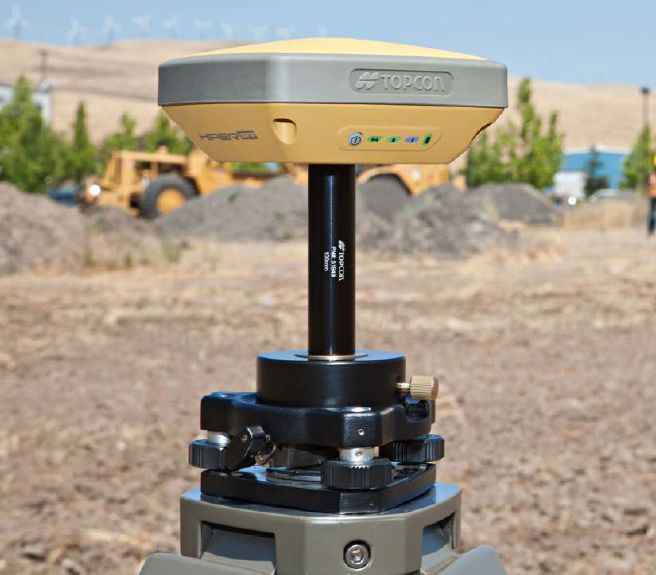
Global Navigation Satellite System (GNSS) technology has revolutionized the way we navigate the world. From personal navigation devices to industrial applications, GNSS has proven invaluable in providing accurate positioning information. However, in harsh environments—whether it be dense urban areas, deep forests, mountainous terrains, or remote Arctic regions—GNSS positioning faces a range of challenges. In this article, we explore these challenges and the solutions being developed to enhance gnss positioning system in these extreme conditions.
Challenges in GNSS Positioning in Harsh Environments
1. Signal Blockage and Multipath Effects
One of the most significant challenges for GNSS positioning in harsh environments is signal blockage. In urban canyons, dense forests, or deep valleys, GNSS signals from satellites can be obstructed by physical structures or terrain features. This results in signal degradation or complete loss of satellite visibility.
Additionally, multipath effects can occur when GNSS signals bounce off large structures, mountains, or other objects before reaching the receiver. This can cause errors in positioning calculations, making it difficult to obtain accurate location data in environments with significant obstacles.
2. Atmospheric Interference
Another major challenge is atmospheric interference. GNSS signals pass through the Earth’s ionosphere and troposphere, where they can be delayed due to weather conditions such as storms, heavy rain, or snow. This atmospheric distortion leads to errors in positioning, especially in areas where weather patterns are unpredictable or severe.
3. Low Satellite Visibility
In remote or harsh environments, such as polar regions or mountainous areas, there may be fewer visible satellites overhead. This low satellite visibility can make it harder for GNSS receivers to calculate accurate positions, as a minimum of four satellites is typically required for precise 3D positioning.
4. Power and Reliability Concerns
GNSS receivers require consistent power and data reception to function optimally. In harsh environments, there are challenges related to power supply—whether from solar energy, batteries, or fuel cells—due to extreme temperatures or unreliable environmental conditions. This issue is particularly critical in remote regions or long-duration applications like autonomous vehicles or surveying in remote areas.
Solutions to Enhance GNSS Positioning in Harsh Environments
1. Advanced GNSS Receiver Technology
To address issues like signal blockage and multipath interference, manufacturers have developed advanced GNSS receivers equipped with technologies such as multi-frequency tracking and multi-constellation support. Multi-frequency receivers can use multiple signals from different GNSS constellations (e.g., GPS, Galileo, GLONASS, and BeiDou) to improve signal acquisition and tracking, even when some signals are blocked or weak.
Additionally, multi-antenna systems help mitigate multipath effects by using multiple antennas to detect and reject reflected signals, improving accuracy in challenging environments.
2. Differential GNSS (DGNSS)
One of the most effective solutions for improving GNSS positioning in harsh environments is Differential GNSS (DGNSS). DGNSS uses a network of reference stations that provide correction data to a GNSS receiver, compensating for atmospheric interference and signal delays. This method can significantly improve the accuracy of GNSS positioning in environments with poor signal quality or challenging conditions.
In regions with limited satellite visibility or high multipath interference, DGNSS systems offer enhanced precision by using ground-based corrections that help eliminate many of the errors inherent in GNSS signals.
3. Integration with Other Sensors
To further enhance GNSS performance in harsh environments, modern systems often integrate GNSS with other sensors, such as inertial measurement units (IMUs), radar, LiDAR, or visual odometry. By combining GNSS data with sensor fusion technologies, the system can compensate for times when GNSS signals are weak or temporarily unavailable. For example, in tunnels, forests, or urban canyons, an IMU can track the movement of the device when GNSS signals are lost, and once the signal is regained, the system can update the position with high accuracy.
4. Use of Augmentation Systems
To mitigate the challenges of low satellite visibility and atmospheric interference, GNSS augmentation systems can be employed. These include systems such as the Wide Area Augmentation System (WAAS) or the European Geostationary Navigation Overlay Service (EGNOS). These systems provide additional correction signals that help improve GNSS accuracy, especially in remote or harsh environments where traditional GNSS solutions might struggle.
5. Advanced Processing Algorithms
To deal with atmospheric and multipath errors, advanced signal processing algorithms can be used. These algorithms help correct signal distortions caused by environmental factors, including weather and interference from nearby objects. Machine learning techniques are also increasingly being applied to GNSS data processing, allowing the system to learn and adapt to specific environmental challenges, further enhancing accuracy and reliability.
Conclusion
GNSS positioning in harsh environments presents several unique challenges, including signal blockage, atmospheric interference, low satellite visibility, and power constraints. However, ongoing advancements in GNSS technology, such as multi-frequency receivers, DGNSS, sensor fusion, and augmentation systems, are helping to overcome these challenges and provide more reliable positioning solutions in even the most difficult environments.
