


Autonomous vehicles are rapidly transforming the landscape of modern transportation. At the heart of their operation lies a complex system of sensors, mapping software, and positioning technologies. Among these, rtk gps in autonomous vehicles: enhancing navigation precision plays a pivotal role. This advanced positioning method is setting new standards for accuracy, reliability, and safety on the road.
What is RTK GPS?
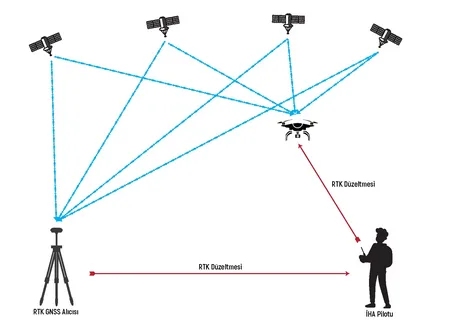
RTK (Real-Time Kinematic) GPS is an advanced satellite navigation technique that improves the accuracy of standard GPS systems. Traditional GPS can be off by several meters, which is unacceptable for the precise operations needed in autonomous driving. RTK GPS, however, uses real-time corrections from a fixed base station to provide centimeter-level accuracy.
Importance of Precision in Autonomous Navigation
Autonomous vehicles must detect lane markings, avoid obstacles, make precise turns, and stop exactly at designated points. Even a small positioning error can lead to unsafe maneuvers. This is why RTK GPS in autonomous vehicles: enhancing navigation precision is more than a convenience—it’s a necessity. It allows for smoother lane changes, better path planning, and enhanced obstacle detection.
How RTK GPS Works in Autonomous Systems
RTK GPS systems rely on two main components: a rover (on the vehicle) and a base station. The base station is in a fixed, known location and sends correction signals to the rover, which adjusts its position based on these signals. This real-time correction significantly reduces GPS drift and enhances positioning fidelity.
In the context of autonomous vehicles, these systems are integrated with IMUs (Inertial Measurement Units), LiDAR, and camera systems to create a comprehensive picture of the vehicle’s surroundings and position.
Real-World Applications and Benefits
Companies like Tesla, Waymo, and Baidu are exploring or already integrating RTK GPS into their autonomous systems. Some key benefits include:
- Lane-Level Accuracy: Perfect for urban environments and highways.
- Better Map Matching: RTK GPS enables autonomous systems to match with HD maps accurately.
- Increased Safety: With fewer positional errors, vehicles make more informed decisions.
Clearly, RTK GPS in autonomous vehicles: enhancing navigation precision is not just a buzzword but a cornerstone of next-generation mobility.
Challenges and Future Outlook
Despite its advantages, RTK GPS requires a network of base stations or subscription to correction services, which may not be available in all areas. Urban canyons and dense forests can also affect signal quality. However, with the rise of satellite networks and 5G connectivity, these limitations are steadily being addressed.
Looking ahead, the integration of RTK GPS with AI-powered decision-making and sensor fusion technologies is expected to further revolutionize autonomous navigation.
Conclusion
The use of RTK GPS in autonomous vehicles: enhancing navigation precision is a game-changer for the industry. By delivering centimeter-level accuracy, it enables vehicles to make safer and more reliable decisions. As the technology becomes more widespread and accessible, it will undoubtedly play a central role in the autonomous transportation systems of the future.
